How to Make Your Home Feel Mentally Lighter
Many people assume that feeling mentally overwhelmed comes from what they are doing, how busy they are, or how much responsibility they carry. While those factors matter, they are only part of the picture. Often, the place where that mental weight quietly builds is the one you return to every day without questioning it: your…
Many people assume that feeling mentally overwhelmed comes from what they are doing, how busy they are, or how much responsibility they carry. While those factors matter, they are only part of the picture. Often, the place where that mental weight quietly builds is the one you return to every day without questioning it: your home.
We want to talk about what it means for a home to feel mentally heavy, and more importantly, how small, thoughtful changes can make it feel lighter without turning your life upside down. This is not about perfect organization or aesthetic trends. It is about reducing the invisible demands your space places on your attention and nervous system.
What “Mentally Heavy” Actually Feels Like at Home
A mentally heavy home does not always look messy or chaotic. You can have a clean house and still feel strangely tense the moment you walk in. The weight shows up as restlessness, irritation, difficulty settling, or the sense that you should be doing something even when you are trying to rest.
This happens because your brain is constantly responding to cues in the environment. When a space quietly asks too many questions, reminds you of unfinished tasks, or demands small decisions, your mind stays active instead of relaxing.
Your brain evolved to notice changes, patterns, and potential problems. In a home filled with visual clutter, noise, or unpredictability, that system never fully switches off. Even when you are sitting down, part of your mind is scanning, tracking, and managing.
We often underestimate how much energy this takes. Mental lightness usually comes not from adding calming practices, but from removing the constant background signals that keep your brain alert.
Mental Lightness Comes From Fewer Demands, Not More Effort
Many people try to make their home feel calmer by adding things: candles, playlists, routines, or self-care rituals. While those can help, they often sit on top of an environment that is still demanding attention. The result is effort layered on top of strain.
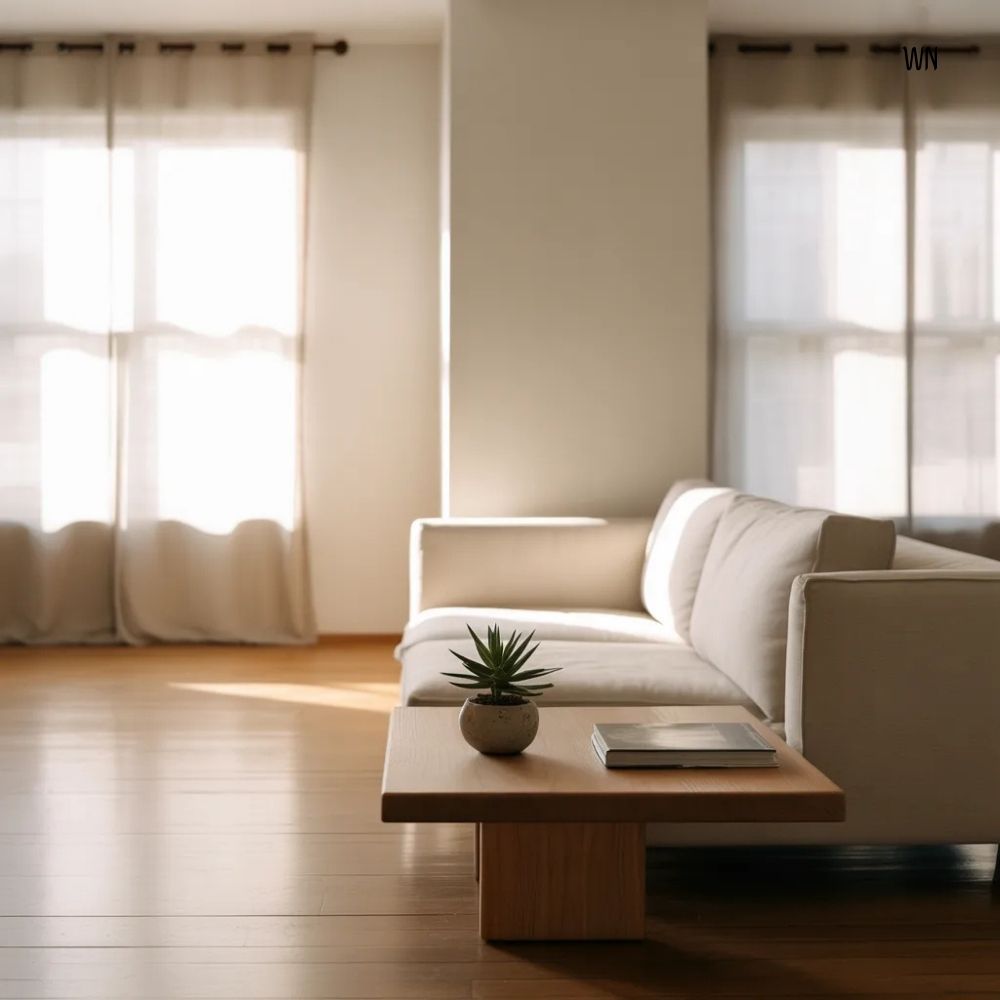
A mentally lighter home usually comes from subtraction. Fewer decisions, fewer reminders, fewer visual interruptions allow your nervous system to relax without being asked to do anything special.
Your eyes are one of the fastest ways information enters the brain. When surfaces are crowded, shelves are overflowing, or items don’t have clear places, your brain has to process more than you realize. Even if you think you are ignoring it, your nervous system is not.
Reducing visual input does not mean minimalism. It means choosing which things deserve your attention and allowing the rest to disappear from view so your mind can finally rest its focus.
Why Clear Surfaces Feel So Relieving
Clear surfaces give the brain a stopping point. When a table, counter, or bedside area is uncluttered, your eyes can land without being pulled into action. There is no decision to make, nothing to remember, nothing to fix.
We often see people underestimate how powerful this is. Clearing just one surface you see frequently can noticeably change how your home feels emotionally, even if nothing else changes.
A home feels lighter when things behave the way your brain expects them to. When keys are always in the same place, when bags live where you reach for them, when essentials don’t require searching, your mind relaxes.
Predictability reduces the need for constant micro-decisions. Over time, this creates a background sense of ease that you may not consciously notice, but your nervous system absolutely does.

Noise Is Mental Weight, Even When It’s Familiar
Constant background noise keeps part of the brain alert. Televisions playing “just for sound,” notifications chiming, or overlapping audio sources increase mental strain even if you are used to them.
Silence is not always necessary, but intentional sound matters. A quieter home, or one with fewer competing noises, allows your mind to settle more deeply without effort.
Clutter is not just visual. It represents delayed decisions and postponed actions, which your brain continues to track. Each item without a clear place becomes an open mental loop that quietly drains attention.
When items have homes, those loops close. Your brain no longer has to keep the question alive, and that closure creates real mental relief.
Creating “Low-Demand” Spaces in Your Home
Not every part of your home needs to serve productivity or storage. Mentally lighter homes usually have at least one area that is intentionally low-demand, meaning it does not ask you to organize, plan, or improve anything.
This might be a chair by a window, part of the couch, or a corner of the bedroom where nothing needs to happen. These spaces signal to your nervous system that rest is allowed.
Large cleaning sessions can help, but they often feel exhausting. Small daily resets, especially in the evening, tend to support mental lightness more consistently.
Putting a few items away, clearing a surface, or setting up for the next day reduces overnight mental load. You wake up to fewer demands already waiting for you.
Reducing Decision Fatigue Through Home Design
Every choice your home asks you to make adds to mental fatigue. Which pile to deal with, where something belongs, what needs attention next. Over time, these choices drain energy you need elsewhere.
Homes that feel lighter answer these questions in advance. Fewer options, clearer systems, and repeated patterns reduce the number of decisions your brain must make daily.
A mentally lighter home feels emotionally safe, not perfect. It allows you to exist without performing, fixing, or optimizing yourself. That safety often comes from permission rather than appearance.
When your home supports who you are instead of who you think you should be, your mind releases tension naturally.
Starting Without Overhauling Everything
You do not need to redesign your home to feel this shift. Starting small is often more effective. Choose one place that feels mentally noisy and reduce the demands it places on you.
Pay attention to how your body responds. Lightness often appears quietly, not dramatically, but once you feel it, it becomes easier to build on.
Mental lightness is not a one-time result. It grows as your environment stops competing for your attention. Each small reduction in demand creates more space for calm to settle in.
The goal is not to control your mind, but to support it. When the environment cooperates, the mind naturally softens.
Final Thoughts
A mentally lighter home is not about aesthetics, productivity, or doing things the “right” way. It is about reducing the invisible effort your brain expends just by being in the space.
By lowering visual noise, reducing decisions, and creating areas that ask nothing of you, your home can become a place where your mind finally gets to rest. When that happens, mental clarity often follows without effort, and everyday life begins to feel a little more breathable.